RAG-POWERED BILINGUAL EDITORIAL WORKFLOW
AI BOOK INTELLIGENCE
A human-reviewed content production system spanning book discovery, source refinement, RAG retrieval and reranking, evidence-card generation, bilingual writing, and editorial delivery.
THE CHALLENGE
Commercial-grade book content requires more than fluent generation. The system had to preserve source fidelity, handle dense context, surface useful evidence, support editorial judgment, and produce consistent bilingual output at scale.
01 / SYSTEM MAP
From source books to governed editorial output
The workflow deliberately inserts inspectable intermediate artifacts between retrieval and writing. Generation is never allowed to jump directly from a book file to a publishable article.Prepare
Clean text, split chunks, build a structural memo and book analysis.
Index
Build BM25 and chunk-embedding indexes for local retrieval.
Materialize
Run three independent retrieval paths.
Govern
Validate schemas, fingerprint sources, deduplicate and record card consumption.
Compose
Create a writing brief, bilingual summaries, A–Z essays and quote selections.
Review
Human editorial QA checks grounding, usefulness, overlap, tone and delivery.
02 / REAL INTERMEDIATE ARTIFACT
A material card is evidence, interpretation and risk in one object
This sanitized card was generated in the production workflow for The Light Eaters. It preserves the query, source chunks, excerpts, confidence and a review flag—not just fluent prose.- CARD ID
- 18_the_light_eaters…::summary::sq1::c0014::card001
- TYPE
- argument
- TITLE
- Plant intelligence: a scientific paradigm shift in progress
- CONFIDENCE
- 0.78
- RISK FLAG
- needs_context
↳ c0014 · “paradigm shift in science”
↳ c0014 · “distributed neuronic substrates”
↳ c0014 · “brainless mind”
03 / SELECTED IMPLEMENTATION
The control layer behind the writing workflow
These excerpts come from the project source. They show how retrieval confidence, traceability and model failure are handled in code.retriever.pyIntersection-first hybrid retrieval+
Prioritizes chunks found by both BM25 and embeddings, then backfills with reciprocal-rank fusion. The retrieval method remains auditable downstream.
def _intersection_first_hybrid(
    bm25_results: list[SearchResult],
    embed_results: list[SearchResult],
    *,
    top_k: int,
    min_intersection: int = 0,
) -> list[SearchResult]:
    bm25_rank = {r.chunk_id: i for i, r in enumerate(bm25_results)}
    embed_rank = {r.chunk_id: i for i, r in enumerate(embed_results)}
    intersect_ids = [cid for cid in bm25_rank if cid in embed_rank]
    intersect_ids.sort(key=_rrf, reverse=True)

    for cid in intersect_ids:
        base = bm25_by_id.get(cid) or embed_by_id.get(cid)
        out.append(SearchResult(
            chunk_id=cid,
            score=HYBRID_INTERSECT_CONFIDENCE,
            method="hybrid_intersect",
            chapter=base.chapter,
            text=base.text,
        ))

    # Backfill via RRF when intersect is too small.
    for cid, _ in rrf_pool:
        base = bm25_by_id.get(cid) or embed_by_id.get(cid)
        out.append(SearchResult(
            chunk_id=cid,
            score=HYBRID_SINGLE_CONFIDENCE,
            method="hybrid_rrf",
            chapter=base.chapter,
            text=base.text,
))schemas/cards.pyEvidence is a schema requirement+
A card cannot validate without source chunks and evidence. Fingerprints, risk flags and confidence travel with the writing material.
class SummaryMaterialCard(SchemaModel):
    card_id: CardIdStr
    query_id: QueryId
    card_type: CardType
    title: str = Field(min_length=1, max_length=80)
    summary: str = Field(min_length=1)

    source_chunks: list[ChunkId] = Field(min_length=1)
    source_fingerprint: FingerprintStr
    evidence: list[EvidenceItem] = Field(min_length=1)
    risk_flags: list[RiskFlag] = Field(default_factory=list)
confidence: UnitFloat = Field(default=0.0)materialize_book.pyStructured-output recovery+
Three progressively stricter attempts lower temperature, preserve raw responses for diagnosis and validate normalized cards before acceptance.
retry_configs = [
    {
        "system": "你是学术素材编辑。直接续写 JSON,不要任何前言或解释。",
        "prompt_builder": lambda: _build_llm_prompt(
            branch, query_data, chunk_dicts
        ),
        "temperature": TEMP_MATERIALIZE,
        "max_tokens": max_tokens,
    },
    # Second attempt tightens JSON constraints and lowers temperature.
    # Third attempt uses the minimal fallback prompt at temperature 0.0.
]

for attempt, config in enumerate(retry_configs):
    user_msg, prefill = config["prompt_builder"]()
    response = call_llm(
        client, model, config["system"], user_msg,
        max_tokens=config["max_tokens"],
        temperature=config["temperature"],
        prefill=prefill,
    )
    data = extract_json_from_response(response)
    if data:
        items = _normalize_llm_cards(branch, data, book_slug, qid)
        if items:
            return items
04 / SHIPPED ARTIFACT
The workflow produced complete bilingual editorial editions
The World of Plants is one of three completed EPUB editions. Its delivered structure includes a bilingual overview, 26 A–Z topic essays, 25 individual book summaries, author information and selected quotations.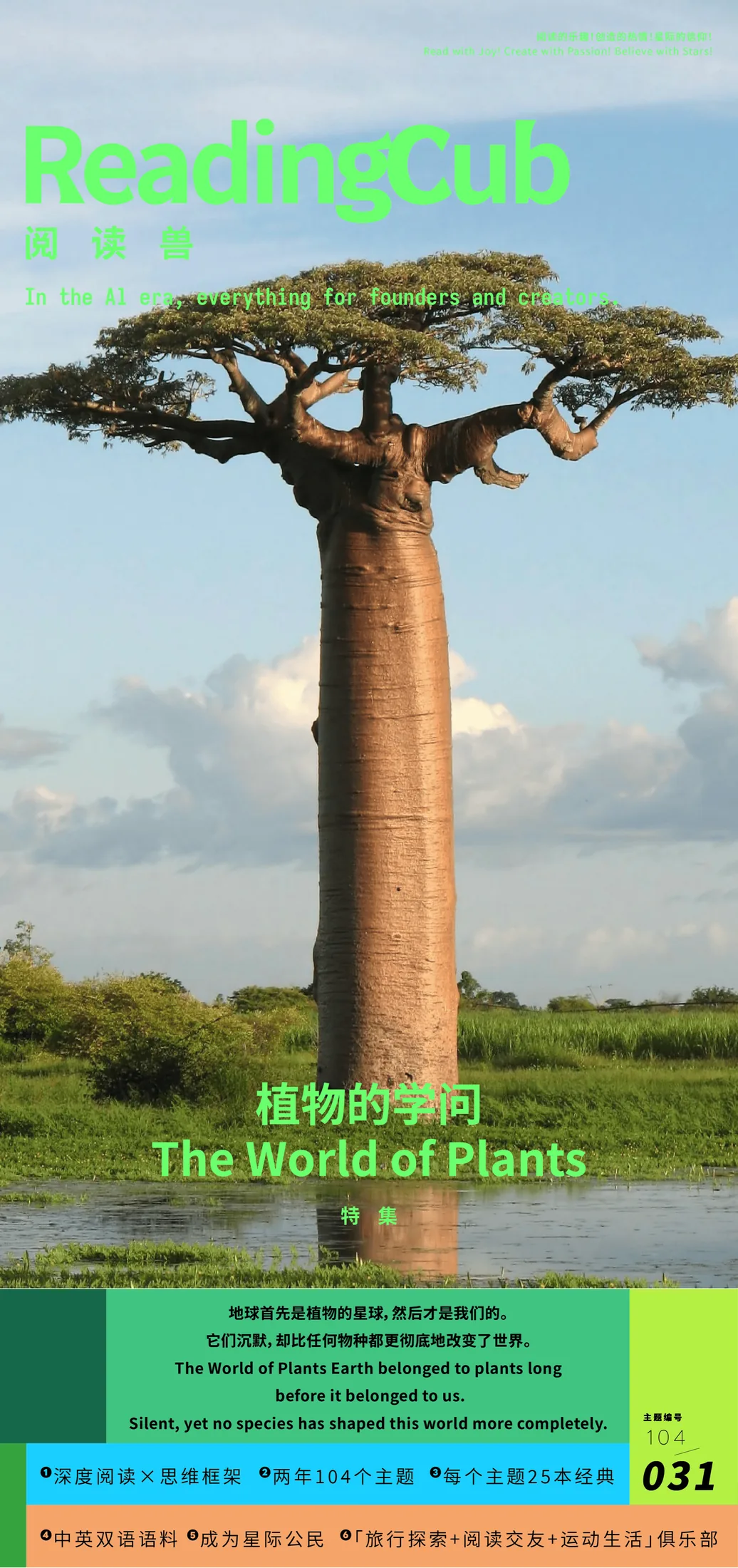
OUTCOME & EVIDENCE
- Three completed bilingual thematic editions covering 75 books.
- An estimated AI-assisted production cycle of 1–2 weeks, compared with roughly one month of fully manual work.
- A reusable process that connects research evidence to final editorial output rather than treating generation as a one-step task.